Wooden Jali Door Manufacturer
VENTILATION & PRIVACY
Wooden Jali Door Manufacturer
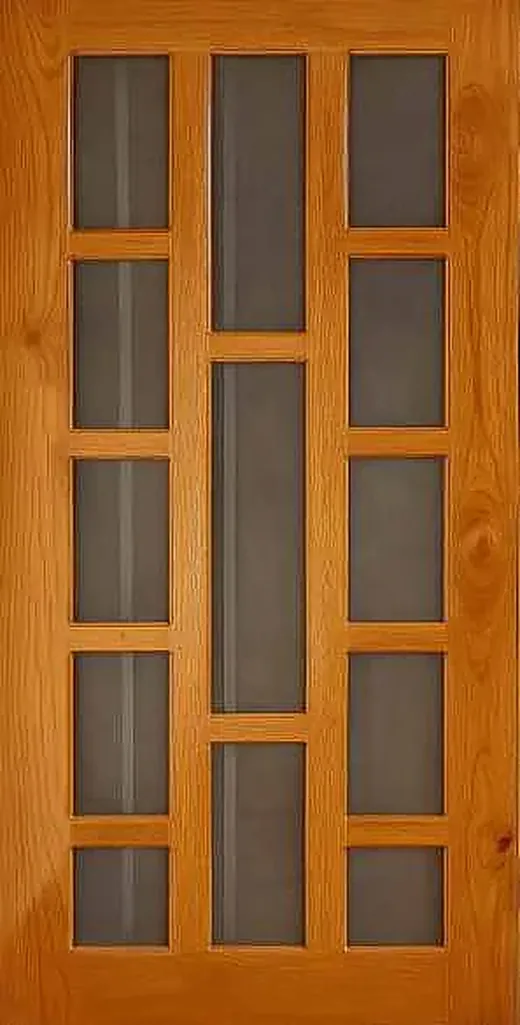
VENTILATION & PRIVACY
Wooden Jali Door Manufacturer
A wooden jali door solves a problem that panel and flush doors can't resolve: airflow and light without sacrificing privacy or structure.
As a wooden jali door manufacturer we produce lattice patterns ranging from traditional geometric jali work to contemporary open designs, along with wire mesh doors and decorative styles suited for sacred spaces and pooja doors.
HISTORICAL ROOTS
The Tradition Behind Jali Work
Jali screens have been a part of Indian architecture for centuries, originally developed as a way to allow air circulation and diffused light into interiors long before mechanical cooling existed and still managing to maintain privacy and structural shade.
Same principle still applies today and a wooden jali door manufacturer producing this kind of work is actually continuing a functional design tradition rather than just adding decoration.
AUTOMATED CNC ACCURACY
Our Manufacturing Process
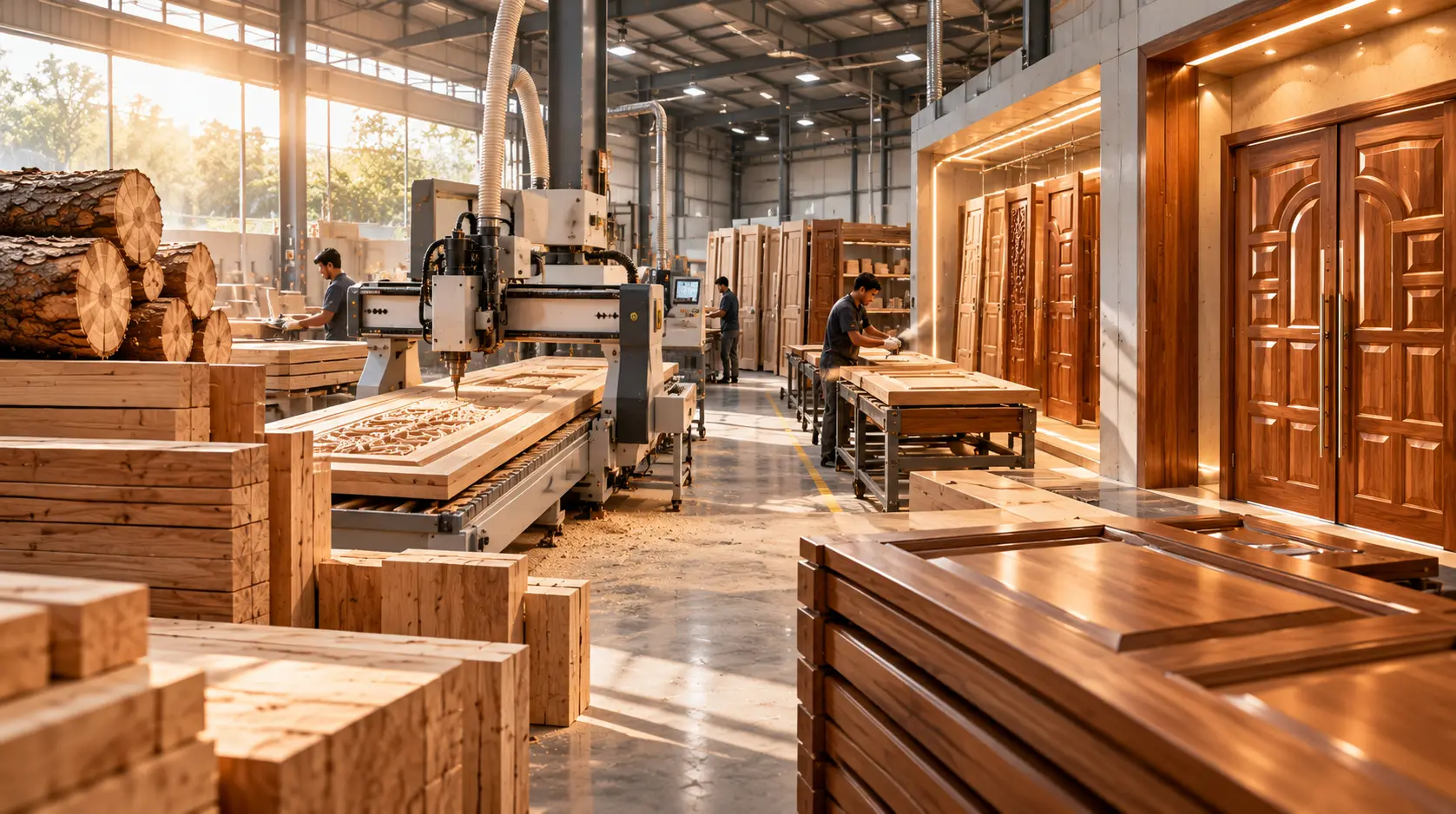
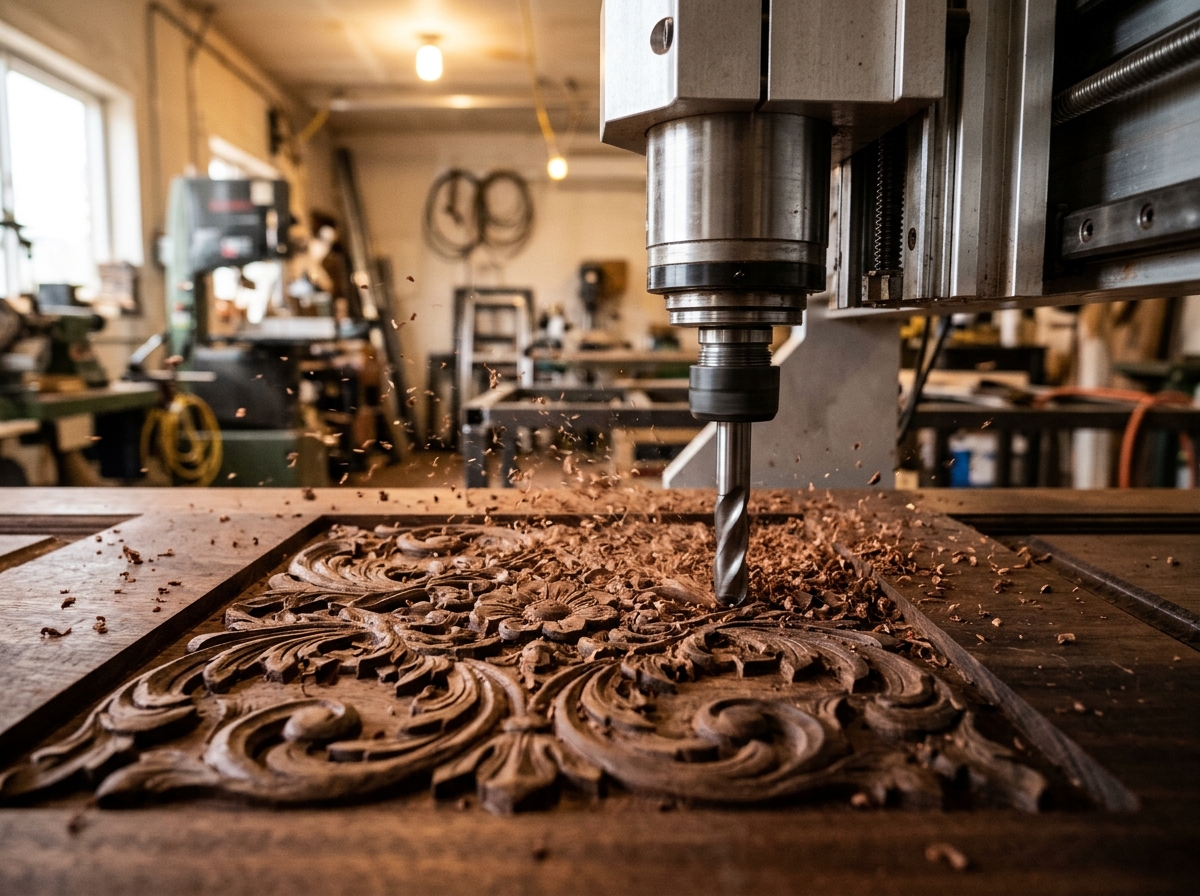
The lattice or mesh work is CNC-cut to ensure consistent spacing and pattern accuracy across a full order, and finished on the same kiln-dried, VPI-treated timber base as our other doors.
Cutting a fine lattice pattern by hand across dozens of doors would result in visible inconsistency in spacing and line weight, but CNC cutting keeps all the panels in an order matching each other which is particularly important when installing jali doors side by side or in a repeating facade pattern.
Where Jali and Wire Mesh Doors Work Best
Jali and wire mesh doors are commonly specified for:
Balconies
Courtyards
Pooja Rooms
Interior Partitions
These are spaces where a solid door would block airflow a project actually needs. They see use as secondary or storm doors in front of a solid main door too, combining security and ventilation in one product.
DURABILITY & ENGINEERING
Balancing Pattern Density and Structural Strength
The finer and more intricate a jali pattern is, the more timber is effectively hollowed out in order to create it. This means pattern design has to balance visual detail against the structural strength of the door. A pattern that's too fine or densely cut can leave a panel fragile at the connecting points between cutouts.
We design and test our jali patterns with that in mind, to ensure a decorative lattice door doesn't break down under years' of regular use rather than being a purely ornamental piece, pairing gracefully with classic panel doors.

START A CONVERSATION
Get a Quote
We supply both standard jali patterns and custom lattice designs matched to a specific architectural style. Contact us for jali door patterns, sizing options and pricing.